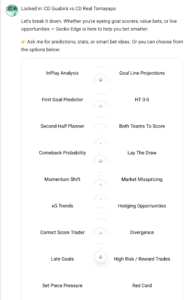
The three prompt types do different jobs. A league prompt runs a fast comparative scan across a whole competition, using consistent baseline assumptions on every fixture: it is built for shortlisting. A fixture prompt rebuilds the analysis for a single match from scratch, with more granular adjustments, and produces a more precise, match-specific EV. An in-play prompt reads a live game as it stands, given the score and the time remaining.
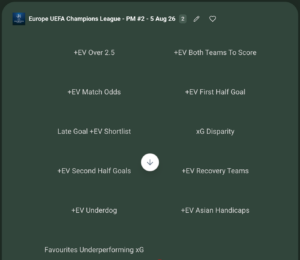
Use the first run to identify candidates, not to place bets. The league scan is the radar: it tells you where to look. The single-match analysis is the microscope: it tells you whether to act.
The same market can show different EV figures in the two views, sometimes by a wide margin. That is expected. The scan is optimised for speed and ranking; the single-fixture run is the refined calculation and the final decision metric. A match can look strongly +EV in the scan and come out neutral or negative examined in isolation. That does not mean the first result was wrong; it means the second result is more refined.
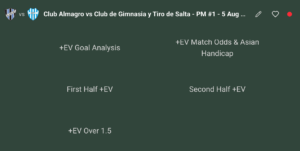
The efficient workflow: scan the league and shortlist only the top few matches showing the strongest EV. Re-run those finalists as single-fixture analyses and accept the single-fixture EV as the decision metric. If the EV stays positive, consider it. If it flips negative, discard without hesitation. You do not need to re-run every match, only the ones you are considering betting.
Once a match kicks off, the in-play prompts take over. The question changes from forecasting the whole game to updating on what has already happened.